Blog for Zipline Attraction in the Smoky Mountains
Located in Pigeon Forge, TN and near Gatlinburg and Sevierville.
Summertime Camping
By Ross Bodhi Ogle
Posted on June 25, 2024
Choosing overnight accommodations is usually one of the first steps in planning any vacation. For anyone thinking about visiting the Great Smoky Mountains, this can be a bigger step than usual because there are so many lodging choices, including hotels and motels, condos, chalets, cabins, and bed and breakfast inns. That doesn't even take into consideration rental properties available through services like AirBnB and VRBO.
This week, we're going to talk about one type of overnight lodging specifically - camping. It's one of those options that tends to be more seasonal, taking place mostly in summer, although spring and autumn are preferable for many. And it's not unusual to see some folks camp in winter too. But since we're in the peak of camping season, we'll share our perspective on what's available when it comes to roughing it - or perhaps not-so-roughing it.
Great Smoky Mountains National Park
If you're okay with not having all the creature comforts, the national park is a great choice for camping, since it immerses you in the beauty and peacefulness of nature. Most park visitors take advantage of the 10 frontcountry campgrounds available in the Tennessee and North Carolina sections. Some of the more popular ones on the Tennessee side are Cades Cove, Elkmont and Cosby.
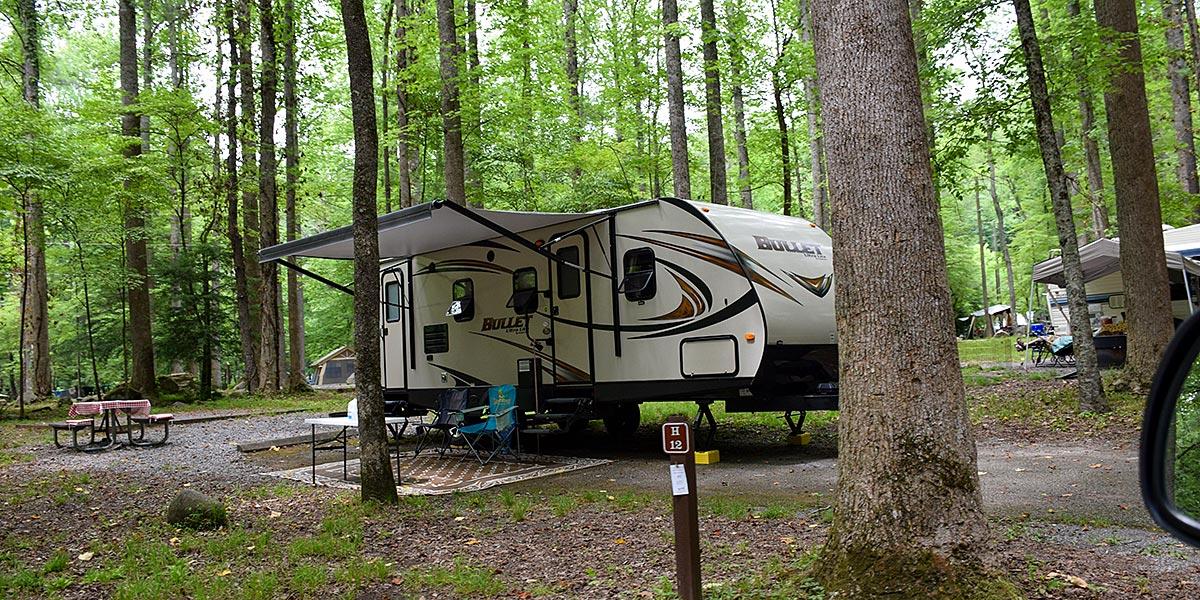
All the park's campgrounds, however, have some mix of tent and RV sites, although note that RV sites generally do not have electric or city water hookups (Look Rock Campground has some). Potable water is often available on a seasonal basis, and only some of the campgrounds have dump stations. Most have flush toilets, but don't expect a shower. So if you're in a camper of some kind, prepare to bring your own potable water and rely on battery power. In many cases, you can't even get cell phone reception. It's best to reserve your campsite in advance, but the fees are reasonable, around $30 per night.
The other option for campers is backcountry camping. These are primitive sites with no amenities that are located in the more remote regions of the park. You generally have to hike to them, and permits are required from the park office.
RV Parks and Commercial Campgrounds
Whether you're pulling a small teardrop or popup camper or driving a 40-foot luxury RV, you may want to consider staying at an RV park or resort when traveling to the Smokies. These facilities usually lack the scenic beauty of the national park, but they often make up for it with amenities that can include, but are not limited to, electric and water hookups, site dump ports or community dump stations, cable TV, WiFi service, a swimming pool or lake access.
You can expect to pay more at a commercial campground than at a state or national park. Some fees are close to the cost of a budget hotel or motel. But in addition to more amenities, you often find that these destinations are closer to town and offer more convenience when it comes to accessing attractions, restaurants and shops. In fact, there are several commercial campgrounds within a short drive of Smoky Mountain Ziplines. Consider them as an overnight-lodging option the next time you decide to play at our Gatlinburg zipline attraction.
Glamping
Lately, we've been seeing more and more businesses that specialize in upscale camping - or glamping. Even within that subset of camping, there are lots of different types of experiences available. For example, some vendors provide upscale tents while others focus more on treehouses, tiny houses or even geodesic domes.
We're also going to throw in an option that's technically a cabin, but guests are really roughing it, so it could be considered camping. That's LeConte Lodge, the overnight facility at the top of Mt. LeConte. Note that you generally have to make reservations at least a year in advance, but they do provide you dinner. Of course, you have to be able to hike up to the summit of Mt. LeConte and back down again.